

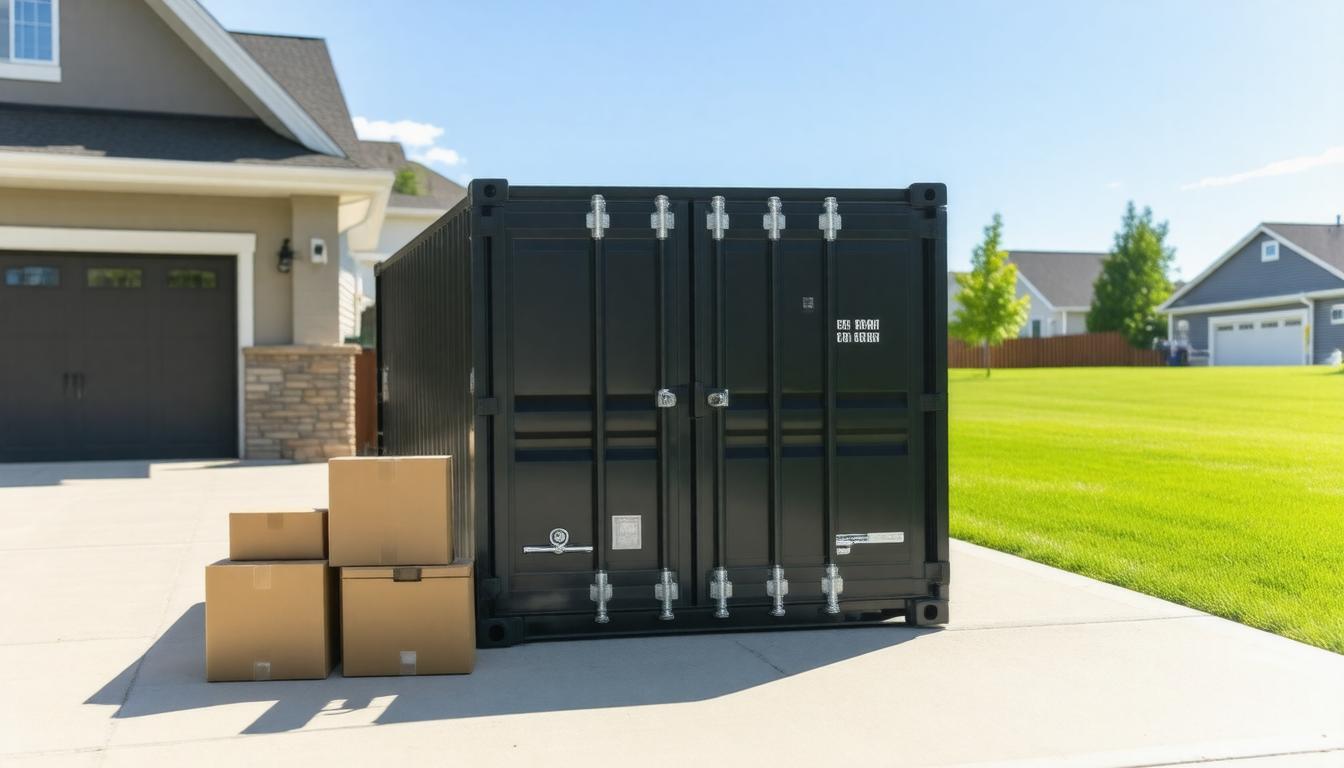
If you’ve ever tried to find extra space for your stuff during a move or a home project, you know how tricky it can be to keep things safe and dry without breaking the bank. Portable storage containers offer a simple solution—they’re like sturdy metal boxes you can park right where you need them, whether that’s your driveway or a construction site. What makes them especially handy is how tough and secure they are outdoors, shielding your belongings from weather and prying eyes. In this article, we’ll break down everything you should know about these containers so you can pick the one that fits both your budget and your space.
Portable storage containers are secure, weather-resistant units designed for temporary on-site or off-site storage and easy transportation. They are ideal for moving, home renovations, construction projects, or extra storage needs, offering convenience by being delivered directly to your location and picked up when you’re done.
Best Portable Storage Containers for Your Needs
The size of your storage container plays a crucial role—not just in how much it can hold, but also in how easily you can place and access it. In South Central Texas, where space and weather conditions vary widely, picking the right size means balancing capacity with convenience. For instance, a 10-foot container works well if you’re storing seasonal items or doing a small home declutter, fitting neatly in most driveways without overpowering the space.
Larger sizes like 20-foot or 40-foot containers come into play when you’re dealing with bigger moves or longer-term commercial storage needs—think home renovations or business inventory. Tiger Sanitation’s experience shows that matching this right size upfront prevents costly complications like multiple trips or inefficient use of space.
Size isn’t just about volume—it affects placement logistics, transportation costs, and ease of use. A container too big for your property can cause access issues or violate local ordinances; too small, and you’ll be cramming and potentially damaging items. A practical approach is to estimate the volume of what you need to store before selecting a container. Inventory your belongings or materials thoroughly—and don’t forget to factor in future additions if your project spans months.
Beyond size, the material and design of these containers serve as your first defense against environmental factors common in outdoor storage.
Most portable containers are crafted from steel, prized for its remarkable toughness and resistance to damage from rain, wind, and sun—conditions typical in Texas summers and occasional storms. Steel’s strength also offers enhanced security, deterring break-ins and protecting valuable contents.
However, steel containers tend to be heavier and less maneuverable compared to their aluminum counterparts. On the flip side, aluminum containers provide lighter weight, which simplifies transport and placement, but they trade off some durability—making them more vulnerable to dents or warping under heavy impact.
These differences matter greatly depending on your use case. If you’re storing heavy equipment or long-term valuable goods exposed outdoors, steel is often the best bet due to its sturdy build and longevity. For shorter-term needs or situations requiring frequent moves—like construction sites switching phases—aluminum’s lightness provides agility and ease.
Tiger Sanitation advises customers to consider not just how long they’ll need the container but also where it will stand: rough terrain favors robust steel; smooth urban locations may benefit from lighter aluminum.
Figuring out these foundational choices naturally leads to another important consideration: whether renting or purchasing a storage container aligns better with your goals.
Renting portable storage containers trims upfront expenses while offering flexibility—a key advantage when needs fluctuate. You avoid maintenance hassles since rental companies like Tiger Sanitation handle upkeep and replacements if necessary.
Conversely, owning your storage container can make sense if you require permanent on-site storage. Yet ownership also means managing maintenance, repairs, and ensuring compliance with local regulations over time.
If your project spans a limited timeframe—as most residential remodels or decluttering efforts do—renting with Tiger Sanitation’s reliable service helps keep things hassle-free with scheduled pickups and drop-offs tailored to your timeline.
For long-term commercial usage where control over access and modifications matter significantly, investing in ownership might pay off despite greater responsibility.
Understanding these factors sets the stage for exploring the practical pros and cons associated with either renting or owning such containers—helping you choose what fits best for your specific situation.
Renting vs. Owning Storage Containers
Renting a portable storage container often appeals because of its low upfront cost. Instead of a large purchase price, you pay rental fees that cover the container and sometimes even delivery and pickup. This approach suits those who need storage for a limited time—say, during home renovations or while decluttering. It offers remarkable flexibility: once you no longer require the container, it simply gets picked up. You avoid the hassle of reselling or storing it indefinitely, which can be a headache if space is limited.
However, while rentals keep expenses down initially, long-term costs can accumulate if you extend the rental period. Monthly fees add up unexpectedly if your project drags on or your storage needs change. Moreover, although the rental company typically handles maintenance and repairs, any damage incurred due to misuse may lead to additional charges. On the plus side, this arrangement removes the responsibility for upkeep from your shoulders, which can be a relief.
Conversely, purchasing a storage container requires a significant one-time investment but presents distinct advantages for certain users.
Owning a container means you can customize and modify it as you wish without restrictions from a rental agreement. For businesses with ongoing storage demands or homeowners planning multiple uses over years, ownership proves economical in the long run. Since there’s no recurring fee beyond initial purchase and maintenance costs, owning eliminates repeated monthly charges. Yet, with ownership comes responsibility: you must handle routine maintenance, find space to store it when not in use, and eventually deal with resale if you decide to part ways with it.
Additionally, owning means less flexibility in terms of upgrades or relocation. If your storage needs change drastically, selling or leasing your container could prove time-consuming and might not command the price you expect. Maintenance can also become costly if the unit endures wear from weather exposure or heavy usage; unlike rentals where companies oversee this aspect.
| Factor | Renting | Owning |
|---|---|---|
| Initial Costs | Low (rental fees only) | High (purchase price upfront) |
| Maintenance | Handled by rental company | Owner responsible |
| Flexibility | Can return anytime after use | Less flexible; must sell or store |
| Long-term Costs | Rental fees accumulate over time | One-time purchase plus upkeep |
| Customization | Limited by rental agreement | Full freedom to modify |
For those uncertain about their duration or frequency of need, renting offers a low-commitment path while ensuring access to quality steel containers maintained by pros like Tiger Sanitation in South Central Texas. Their available plans match various project lengths and scales so you’re never overpaying for unused space.
Meanwhile, if your demand is steady—such as small business inventory overflow or frequent remodeling projects—owning might be more practical despite upfront costs. The control it grants over customization makes it appealing for those envisioning long-term use.
Grasping these options lays the groundwork for appreciating how portable storage serves your needs efficiently and securely. Next, attention turns to key features that make these steel containers stand out in performance and practicality.
Essential Benefits and Features
One of the foremost benefits of portable storage containers is their flexibility. Because these containers are designed as standalone units, they can be delivered right where you need them—whether it’s your driveway, a construction site, or a remote location. This eliminates the hassle of transporting your belongings back and forth and allows for easy repositioning if your project or storage needs change. It’s a bit like having your own mini-warehouse that moves with you.
Alongside flexibility is the critical aspect of security. Most portable containers come built with heavy-duty steel walls, reinforced doors, and lockboxes designed to thwart tampering or break-ins. This architectural sturdiness offers peace of mind, especially when storing valuable tools, equipment, or household items. Unlike renting traditional self-storage spaces where you depend on site security measures, having a locked container onsite puts control directly in your hands.
Then there’s the question of cost-effectiveness, which often seals the deal for many users. Traditional storage units involve ongoing monthly fees without any ownership benefits, plus potential transportation costs to move items in and out. Portable containers regularly prove more affordable over time, particularly for long-term projects or home renovations requiring continuous access. The ability to rent by duration tailored to your needs keeps expenses predictable and often lower compared to other options.
Beyond those headline benefits, certain features truly elevate the utility of these containers. For instance, weatherproof sealing ensures your contents remain dry and undamaged through Texas storms or humid summer heat. Many containers also have ventilation options that prevent moisture buildup—critical if you’re storing sensitive materials like electronics or furniture. Good ventilation balances protection with airflow to reduce mildew risk.
- Robust steel construction withstands physical damage and weather.
- Lockable cam bars provide added security layers.
- Weatherproof seals guard against water intrusion.
- Ventilation prevents mold and odor buildup.
- Customizable sizes offer options matching your volume demands.
- Flat floors inside accommodate stacking and optimize space use.
While it’s tempting to focus solely on size or price, prioritizing durability and security will pay dividends over time—not just in convenience but also in protecting your belongings from unexpected environmental or theft risks. Tiger Sanitation encourages customers to look carefully at these features when choosing their portable storage container rental to get the best balance between affordability and protection.
| Feature | Benefit | Why It Matters |
|---|---|---|
| Flexibility | Easy relocation between sites | Supports changing project needs without hassle |
| Security | Lockboxes and reinforced doors | Protects valuables from theft |
| Cost-effectiveness | Lower long-term cost than traditional units | Saves money during extended use |
| Weatherproofing | Sealing against rain and humidity | Keeps items dry and undamaged |
| Ventilation | Airflow channels inside | Prevents mold and musty odors |
| Variety of Sizes | Container sizes tailored to project dimensions | Avoids paying for unused space |
Selecting the right container involves understanding both your specific storage requirements and the conditions it must endure outdoors. With Tiger Sanitation’s expertise, customers can secure rentals that combine reliability with optimal performance in diverse environments.
Weatherproof and Secure Design
When you’re placing a storage container outside—whether on your property during a renovation or at a job site—its ability to stand up against the elements is crucial. A container that isn’t weather-resistant quickly becomes vulnerable to water damage, rust, and warping of contents inside. That’s why top-tier portable storage units are built with features like rubberized door seals, which snugly block out rain and snow, combined with tough, rust-proof coatings on the steel exterior. These coatings protect against oxidation, especially in humid climates like South Central Texas where moisture can quietly erode metal if left unchecked.
But weatherproofing isn’t just about keeping rain out. Moisture trapped inside can lead to mold growth—a sneaky threat that compromises both stored items and the container’s interior walls. The clever solution is integrated ventilation systems that allow air to flow through without inviting in dust or pests. Proper airflow reduces humidity levels inside, preserving your belongings and preventing that musty smell which can sometimes linger in poorly designed containers.
Moving beyond weather challenges, security is equally important when your container sits exposed outdoors. It’s not uncommon for valuable tools, equipment, or personal belongings to be stored in these containers, so safeguarding them against theft becomes a priority.
Seek out containers equipped with reinforced lockboxes that shield padlocks from being easily tampered with or cut away. High-security padlocks—often made from hardened steel with complex locking mechanisms—add an extra layer of protection compared to standard locks. This combination creates a physical deterrent that slows down or discourages potential intruders.
Additionally, some containers come with options for alarm systems or GPS tracking, enhancing security by alerting owners promptly if unauthorized access is attempted or if the unit moves unexpectedly. This technology integration is particularly handy for businesses managing multiple containers at different sites.
It’s worth noting that providers differ in their focus; some prioritize weather resistance with advanced seals and corrosion-resistant finishes, while others emphasize security features like robust locking mechanisms and tamper-proof hardware. For instance, companies such as U-Haul offer containers that excel in security enhancements but may require supplemental weatherproofing depending on local conditions, whereas PODS containers lean heavily into superior all-weather protections but offer more basic locking setups.
Knowing how these design features align with your particular usage helps clarify priorities and prepares you to make smarter rental decisions as you plan your budget for portable outdoor storage solutions.
Cost Considerations and Budgeting
When evaluating costs for renting or buying a portable storage container, it’s important to look beyond the sticker price. Rental fees alone can vary widely—from as low as $50 a month for smaller, basic units to upwards of $500 for larger containers equipped with extra features like enhanced security locks or climate control. If you’re considering purchasing a container outright, prices typically start around $1,500 for small sizes and can exceed $5,000 when you factor in custom builds or specialized materials.
But the initial fee is just one piece of the puzzle. Delivery charges often come separately and fluctuate depending on distance and logistics, sometimes adding several hundred dollars to your total cost. Then there’s maintenance: rust prevention treatments, repainting, or repairs if minor damage occurs during use. Customization—such as shelving installation, ventilation systems, or reinforced locking mechanisms—also contributes to overall expense but can significantly enhance functionality and security.
To manage these variables effectively, take the time to gather multiple quotes from local rental and sales providers. This not only ensures competitive pricing but may reveal package deals that bundle delivery, maintenance, and pickup services—potentially lowering your out-of-pocket expenses. Websites like https://choosetiger.com offer transparent pricing breakdowns alongside authentic customer reviews that help paint a fuller picture of what to expect both in cost and service quality.
Remember to clarify service terms: Are rental periods flexible? What penalties exist for early returns or damages? Asking these questions upfront safeguards against surprise fees later.
With these cost insights in hand, it’s easier to appreciate how versatile portable storage containers can be across many different settings and needs.
Practical Uses for Storage Containers
Portable storage containers excel far beyond just holding your belongings during a move—they are remarkably versatile tools that adapt to both everyday and specialized demands. Most people think of using them for residential purposes: perhaps storing furniture between moves or decluttering during a renovation.
However, their utility extends deeply into many commercial and industrial sectors as well. For example, construction sites rely heavily on these containers to securely store tools, equipment, and materials right onsite, simplifying logistics while protecting assets from theft or weather damage.
Moving into agriculture, the sturdy steel build helps farmers safeguard machinery or seasonal crops without worrying about pests or spoilage.
Their modular nature also means you can position them wherever needed—whether in tight urban environments or sprawling rural landscapes—enhancing operational efficiency and flexibility.
This adaptability shines in educational and small business settings too. Schools frequently use portable containers as temporary classrooms or storage rooms when facing space limitations due to growing student populations or renovations.
Small retailers may convert them into seasonal stockrooms during peak sales times, enabling expansion of inventory without costly leases on additional retail space.
Considering these traditional uses paints a picture of reliability and convenience, but the story grows even more fascinating when we explore how innovation has breathed new life into these containers, turning storage into opportunity.
Innovative Uses
The rugged durability combined with inherent mobility has inspired a wave of creative repurposing across the country.
Entrepreneurs and community leaders alike have embraced shipping containers for their potential as pop-up shops, temporary cafés, or even eco-friendly tiny homes. These transformations highlight not only environmental benefits—by reusing existing structures—but also cost savings compared to conventional construction.
Take the example of a San Francisco startup that reimagined old shipping containers as affordable housing units for low-income families. By retrofitting the steel shells with insulation, plumbing, and electricity, they created safe living spaces deployable quickly in high-demand urban areas.
This kind of project demonstrates groundbreaking ways portable storage solutions can serve social needs while maintaining affordability.
If you’re evaluating whether a portable container fits your lifestyle or business model, consider both its traditional strength in secure storage and its capacity for imaginative adaptation.
They can bridge gaps in space challenges, provide secure onsite functionality, and even spark innovative ventures—all at an affordable price point.
Keep exploring our options at https://choosetiger.com to find the best deals tailored exactly to your needs. Whether you require simple storage or are dreaming bigger, Tiger Sanitation makes it easy to access reliable portable containers that fit your budget and purpose.
Portable storage containers offer unmatched flexibility and security for a wide array of uses, proving invaluable across industries and inspiring innovative solutions for modern challenges.